Most animals treat their reflection as a stranger. A few do not.
In the mirror test, an animal gets a mark it can only see in a mirror. If it uses the mirror to touch or inspect the mark on its own body, researchers take that as a sign it recognises itself. Since 1970 the list has grown, and so has the debate.
AI-generated image, not a photograph of a real person or place.
A hidden mark
A mirror
A touch on the self
The mark test in three parts
THE SHORT ANSWER
A few species pass, most do not.
Passing means using the mirror to find a mark on yourself. Here is where the test began, and where it has gone.
APES
Where it started
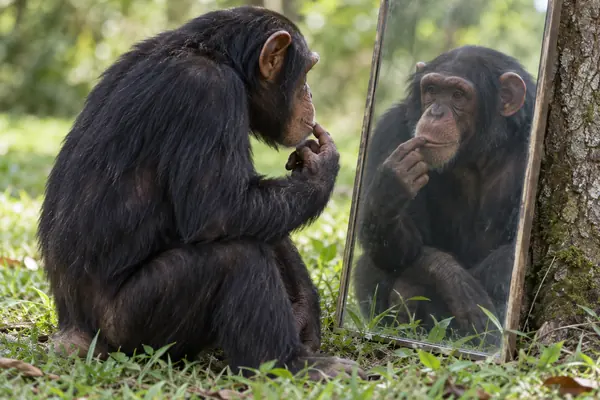
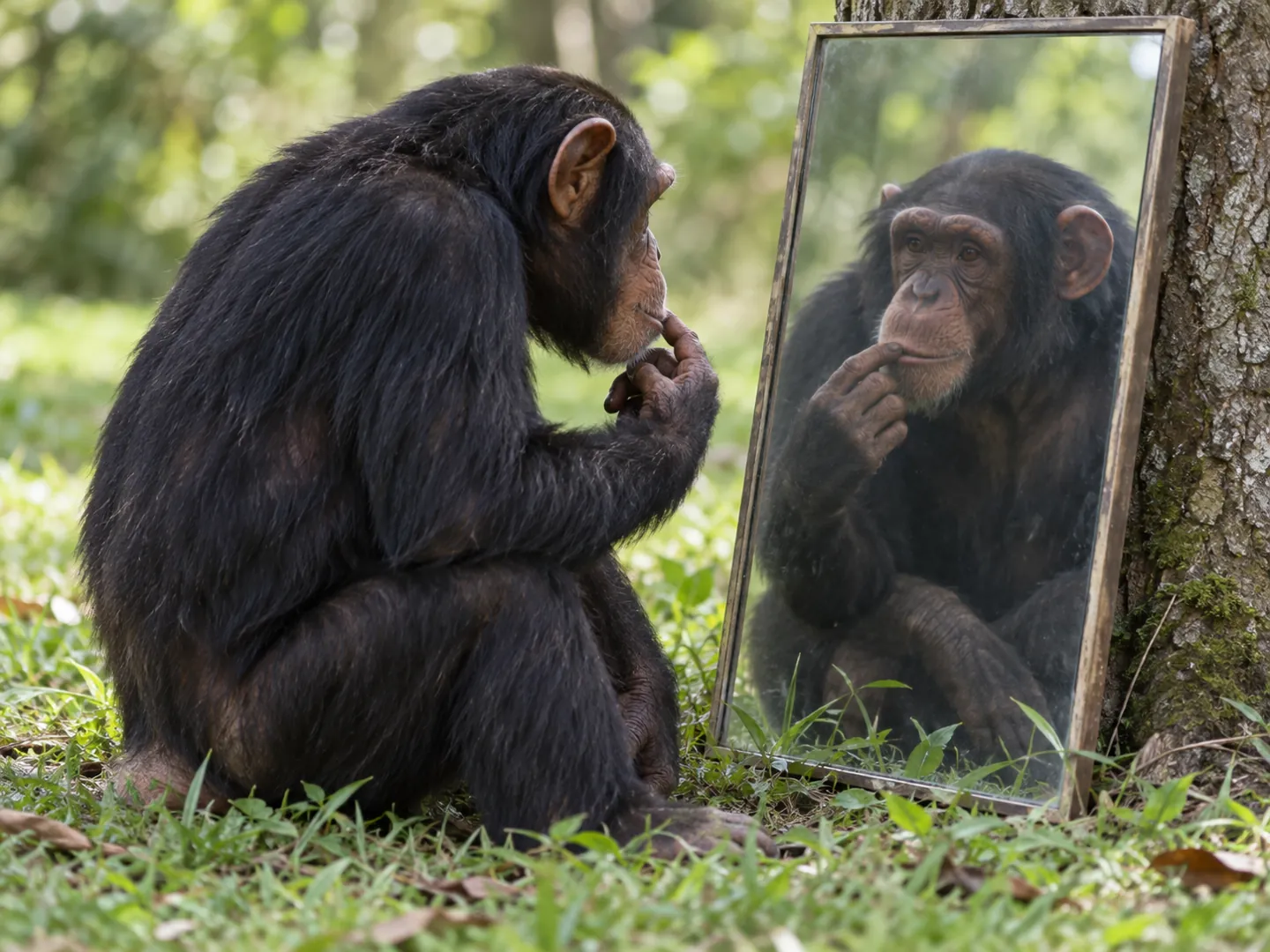
In 1970, chimpanzees marked with red dye showed they could recognise their own reflections after long exposure to mirrors. Monkeys did not appear to have this capacity.
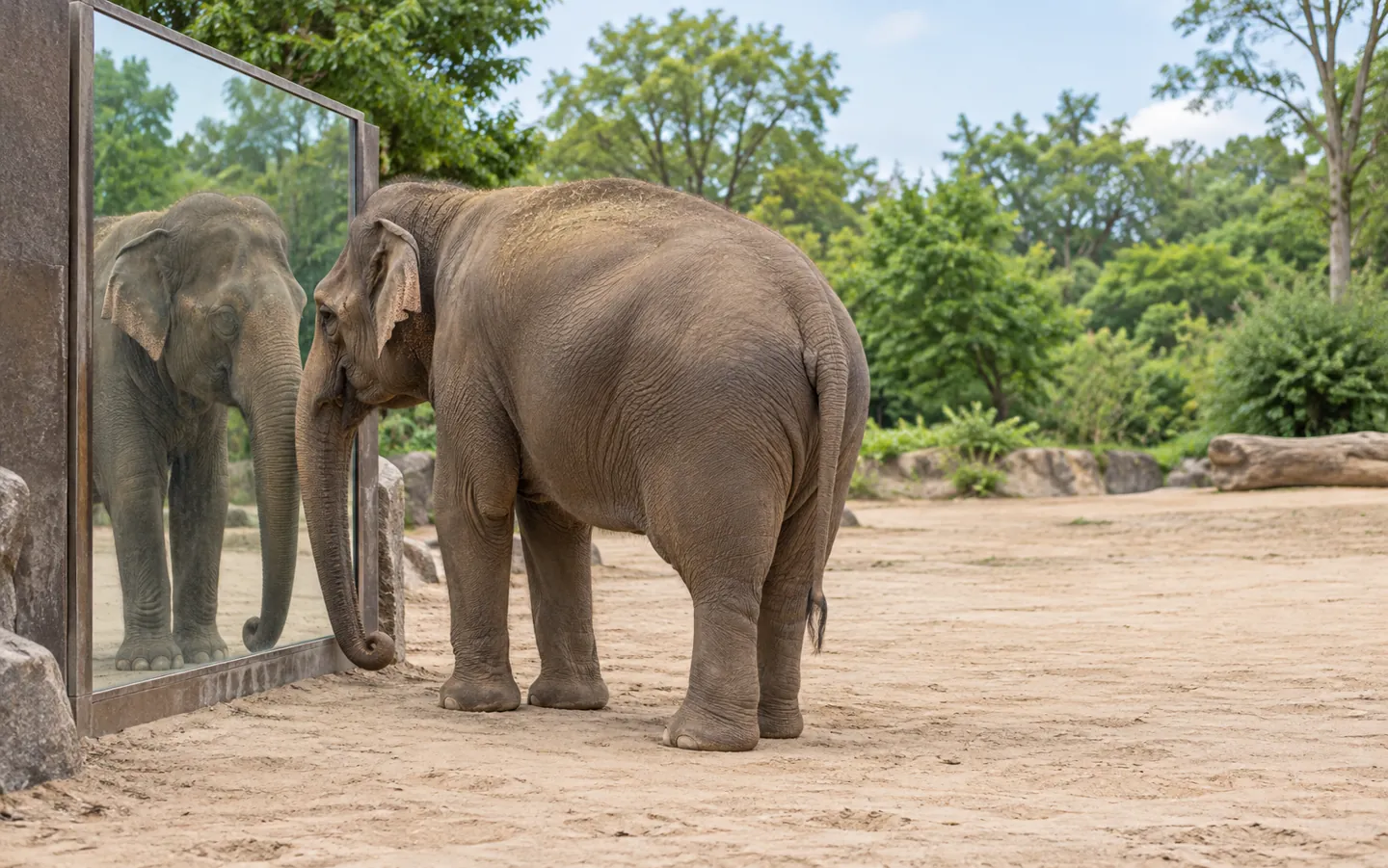
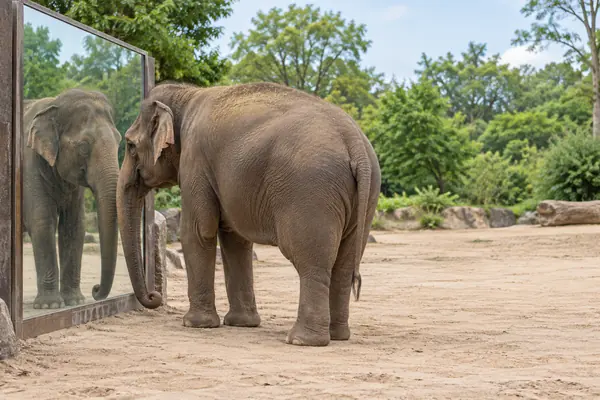
Three Asian elephants were given a large mirror. All three reached the later stages of mirror behaviour, and one passed the mark test, touching an X on her head with her trunk.
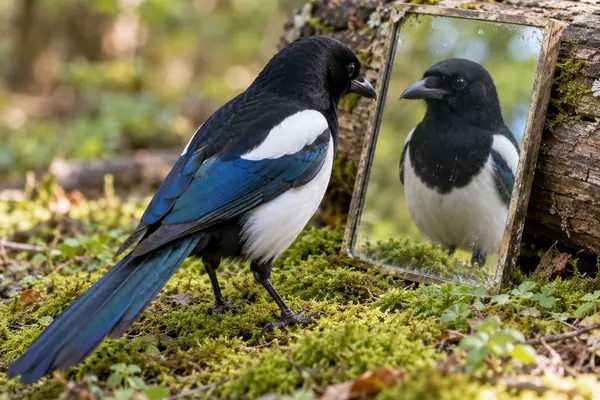
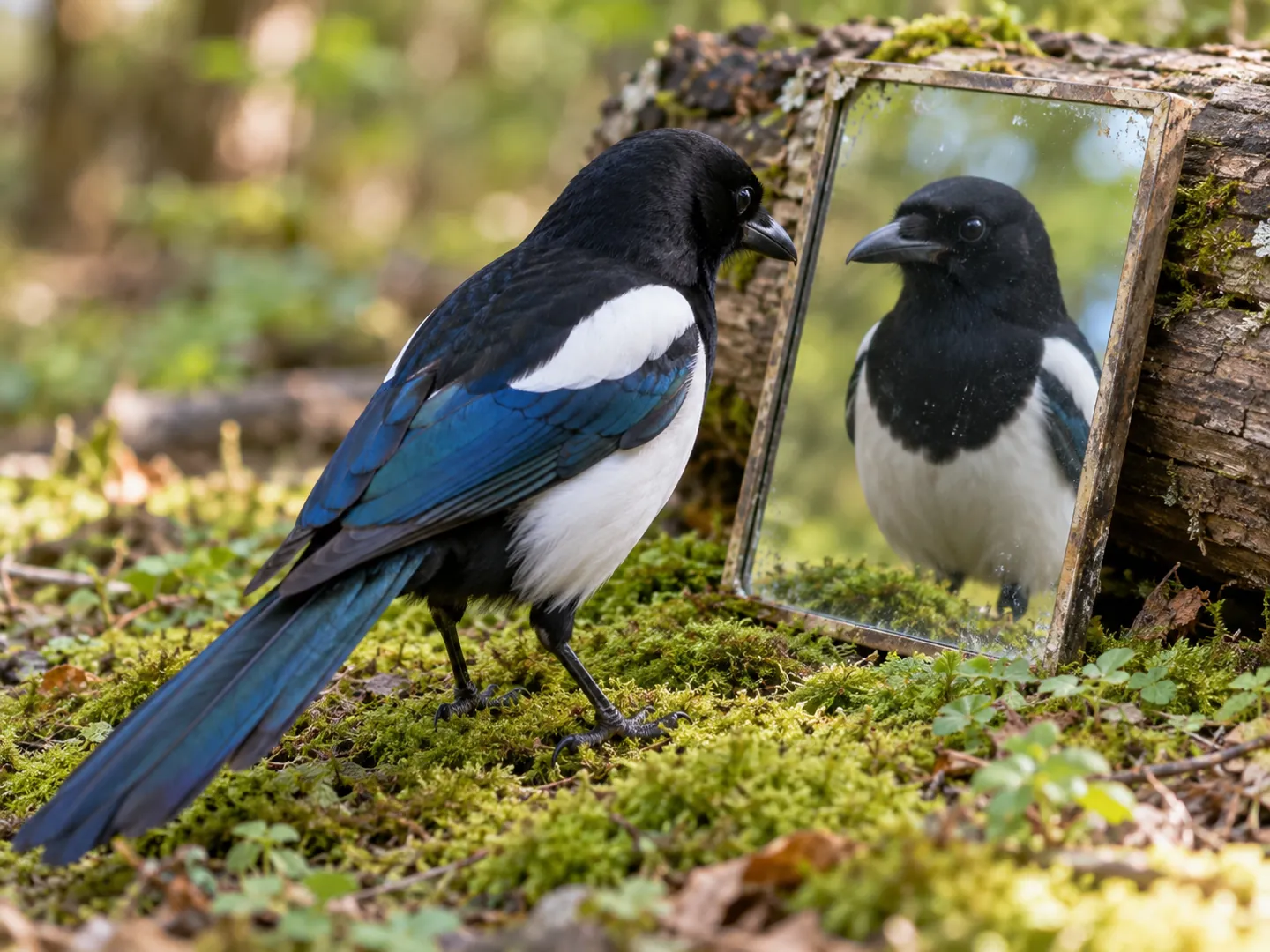
In 2008 magpies became the first non-mammals reported to show mirror self-recognition. In 2019 a small fish, the cleaner wrasse, appeared to pass too, which reopened the debate.
Pick a species to see what its landmark mirror study found. The bar shows how clear-cut the published result was.
Based on studies in Science (1970), PNAS (2001, 2006) and PLoS Biology (2008, 2019).
TWO NUMBERS WORTH KNOWING
Toddlers pass, most elephants did not.
Self-recognition takes time in children, and is not guaranteed in every member of a species.
18–24 months
Age at which toddlers clearly show the marker behaviours
In the version for children, a rouge mark is placed on the nose. Studies suggest toddlers begin to clearly show the marker behaviours between 18 and 24 months of age.
HUMAN TODDLERS
1 of 3
Elephants that passed the mark test
All three elephants reached the third and fourth stages of mirror behaviour, but only one, touching the mark with the tip of her trunk, passed the mark test.
ASIAN ELEPHANTS · 2006
Sources: Rigato et al. (2024), Child Development, University of Essex; Plotnik et al. (2006), PNAS.
HOW THE MARK TEST WORKS
Four stages in front of a mirror.
Researchers studying elephants describe four stages that animals capable of mirror self-recognition typically go through. The mark test checks the last one.
Social responses
At first the animal treats its reflection as another animal, sometimes greeting or threatening it.
Physical inspection
It explores the mirror itself, for example looking behind it.
Testing the mirror
It makes repeated movements while watching the reflection, as if checking that it moves too.
The mark test
A mark is placed where only the mirror can show it, with an invisible sham mark as a control. Touching the visible mark counts as passing.
AI-generated image, not a photograph of a real person or place.AI-generated image, not a photograph of a real person or place.
WHY IT IS DEBATED
A test built for hands and eyes.
The mark test asks an animal to notice a mark and touch it, which suits apes. Researchers point out that the behaviours it relies on may be hard for humans to read in very different animals, especially those without hands or limbs.
The cleaner wrasse study made the problem sharp: either a fish is self-aware, or passing the test can come from some other mental process. Even in children, researchers at the University of Essex note that the rouge test has been criticised for giving a reductionist picture of self-awareness.
Questions
Questions people ask
What is the mirror test?
An animal is given a mark it can only see in a mirror. If it uses the mirror to touch or inspect the mark on its own body, researchers count that as evidence of mirror self-recognition.
Which animals have passed?
Published studies report passes in chimpanzees, bottlenose dolphins, one Asian elephant and some magpies. A 2019 study reported a cleaner wrasse fish passing, which experts dispute.
Do monkeys pass the mirror test?
In the original 1970 study, chimpanzees showed evidence of recognising themselves, but monkeys did not appear to have this capacity.
When do children recognise themselves in a mirror?
In the rouge test, toddlers begin to clearly show the marker behaviours, such as reaching for the mark, between 18 and 24 months of age.
Does failing the test mean an animal is not self-aware?
Not necessarily. Researchers note that the test depends on behaviours that may be hard to see in animals with very different bodies and senses, so a fail is hard to interpret.